
Cross Sections | June 2026
PBS News, Grace in Channel Surfing, and Juneteenth Reflections
Here’s the month of June in a nutshell…and yes, I know I’m late. But without further ado, here are a few law, gospel, and grace-in-life reflections from last month…
Nothing New Under the Sun with David Hockney
Once again, PBS NewsHour delivers the goods, or at least some semblance thereof. Full disclosure: I had never heard of British artist David Hockney until his death earlier this month. But being the avid PBS news viewer that I am, the story caught my attention.
A few moments in the piece stood out as especially salient - namely, Hockney’s insistence on painting as a way of learning how to look, particularly at the human face. As he puts it: “I’m interested in ways of looking. Of course people will respond. Everybody does look, it’s just a question of how hard.”
And then his quiet critique of photography, not as a rejection of technology, but as a defense of attention itself: “Photography is not good enough… it’s just a snap. But I mean, why not look longer at something, look longer, and you maybe see more.”
There is something profoundly redemptive in that invitation to linger and remain with what is before you long enough for it to open up. I find myself thinking here of Christ’s words in the Sermon on the Mount, where he tells us to “look at the birds of the air…” in quiet contemplation of God’s provision and grace. St. Paul’s words to the Corinthians also come to mind as he reminds us that to live in reality is to walk by faith, not merely by sight.
And I love that Ecclesiastes gets the last word in this piece, as Hockney answers a question about whether painting still has anything new to offer. He turns the question back on us: “What is new really new? Is there anything new under the sun?” In that sense, he seems to recognize the weight and relief of his own relative smallness in the grand scheme of things. And maybe that is part of what grace does too: it loosens our grip on needing to be new, exceptional, or definitive, and frees us simply to see what is already there.
America at 250: Kingdom, Nation, and a Nuanced Perspective
In another PBS NewsHour segment, historian John Fea offers a nuanced, alternate view of the ever-debated intersection of faith and politics. The segment, narrated by Judy Woodruff as part of the ongoing series America at a Crossroads, begins with a focus on so-called “Faith First” voters, before turning to the perennial question of how much Christianity actually shaped the thinking of the Founders as they framed the American experiment.
Fea, author of In God We Trust: Was America Founded as a Christian Nation? (now in its third edition), is a central voice in the discussion. As an evangelical Christian himself, he makes a key theological and civic distinction: Christian identity, he argues, is rooted first in allegiance to the kingdom of God, which transcends national boundaries.
For Fea, this matters because it resists collapsing Christian faith into American identity. In his view, Christians are citizens of a kingdom that is not defined by any nation-state, which frees them to both affirm and critique their country without confusion of loyalties. Patriotism, in that sense, does not override discipleship, nor does discipleship require uncritical patriotism.
As I listened to his framing, I found myself drawn back to the deeper question underneath it all: what does it mean to live faithfully in a nation without turning that nation into a theological category?
It also made me realize I probably need to return to my read-through of City of God. Only about 17 chapters left. Who knows—I may even finish it in time for America’s 300th.
*You can read the full piece here.
The Left, The Lucky, and the Freedom of Writing…

Once again, more good news transcends through a PBS Newshour segment. I suppose this is one of the more consistent places where I functionally live these days. My guess is that it has something to do with the fact that as a kid, my Dad would faithfully watch three news programs every evening (at least as far as I recall): Tony Brown’s Journal (RIP Tony), Black Nouveau, and McNeil/Lehrer, which later became PBS Newshour. Who knows? Perhaps by some strange unconscious osmosis, I inherited this ritual of settling in and focusing my gaze on the state of the world. In any case, here is yet another story that spoke to me last month.
Arts correspondent Jeffrey Brown interviewed Portland novelist Willy Vlautin who according to the segment, has “built his career writing about people on the edges of the American dream: working-class families, lonely alcoholics, and those struggling to make ends meet in the fast-changing American West.” Again, another figure with whom I was previously unfamiliar, but whose insight into the writing process spoke volumes about the power of grace. I especially loved this section of the interview in which Brown discusses Vlautin’s novel, The Left and the Lucky:
Willy Vlautin
So many cities in the West, the working-class people of the city get pushed out. Whole neighborhoods were changing, and housing prices I think went up almost five times. And so it was shocking to me, the massive growth or influx of money and the way Portland changed. Yes, I had to write about it.
Jeffrey Brown
And it became the background for “The Left and the Lucky” and an unlikely friendship between house painter Eddie Wilkens and an 8-year-old named Russell from a broken home, a friendship that just might save them both.
Willy Vlautin
And it was a cool friendship, I think.
Jeffrey Brown
You enjoyed writing it or finding it?
Willy Vlautin
Oh, yes. I love -- you can’t save people in real life. Yes, you can barely save yourself. But, in books, you can take one broken kid and kind of give him a break. I mean, there’s nothing worse than seeing -- like, I can see it. Just going to grocery store, you see some broken kid or some family. I can just feel that stuff.
And so writing about it both eases it out of my mind, and then I can change directions.
Jeffrey Brown
I don’t know if I ever heard a writer say this. So, as a novelist, I mean, you feel like you can save people?
Willy Vlautin
I always felt foolishly that if everything I was scared of, loved was destroyed by, anxiety-ridden by, and put it in a box, I always thought if I took one of those things out and studied it, wrote stories around it from every angle, that it would take the power away of it.
But what I learned is like, you can hold somebody’s hand through a hard time, and it just eases my mind. So you’re putting them in a bad situation, yes, sure, but then their friend going through it.
Grace in Channel Surfing or ‘At the Movies with Jason…in the Month of June’
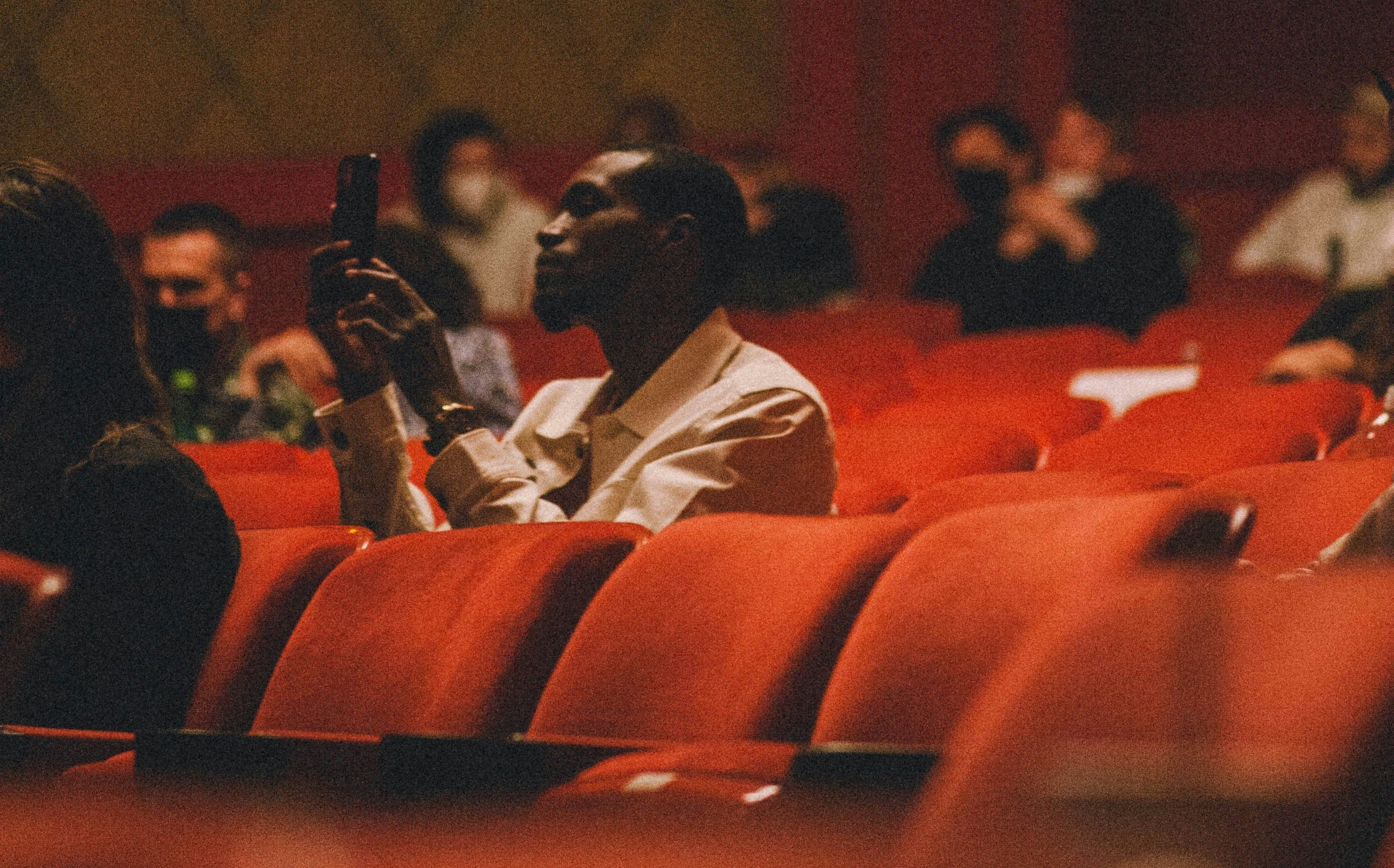
One of my other favorite hobbies when I’m not over consuming myself with world news (it’s not healthy btw - see John 14:27), is channel surfing and landing on some random film I’ve never seen. There is something about being captured by an unfamiliar movie that resembles being swept up into a narrative larger than yourself. Maybe, I’m being too dramatic here, lol. But still, it’s more fun to have a movie (or any medium of art) find you and surprise you than it is to be in control of what you’re viewing…if that makes sense. It’s even more fun when you find something that surprises you with undertones of grace…So, here’s a list of a few titles (some classics, some okay, some complete trash) that apprehended my attention (or randomly occupied my thoughts) last month…Note: there is no method, only madness in this list…
On the Come Up
I didn’t technically watch the entire film (my attention tends to split between viewing and domestic responsibilities), but I caught the overall gist. A teenage girl struggles to make a name for herself as a hip-hop artist and battle rapper. Mike Epps and Method Man appear in supporting roles in this adaptation of Angie Thomas’s On the Come Up. At times, it felt like Akeelah and the Bee refracted through hip-hop battles. The final rap scene especially carried that same energy—less about competition and more about the power of language itself: poetry, cadence, syntax, and metaphor as tools of survival. There’s something deeply rooted there in Black cultural expression, where language becomes both art and strategy for navigating a complicated American reality. When Bri delivers her final verse, it lands with a kind of quiet honesty—less about dominance and more about truth. Grace, in a sense, over what the world tends to call strength and valor. Now I need to go back and watch the whole thing properly.
Far From Heaven
Yikes, this movie was so good…But admittedly, I missed the last 20 minutes because I had to run to an appointment. Todd Haynes delivers a powerful story set in 1950’s New England, starring Julianne Moore, Dennis Haybert, and Dennis Quaid. Social norms are challenged. Secret lives are exposed. And a color visual palette underscores themes of forbidden love, upholding appearances, forgiveness, and grace. My favorite dialog in the film occurs between Cathy Whitaker (Moore) and Raymond Deagan (Haybert) at a critical moment:
Cathy Whitaker
It isn’t plausible for me to be friends with you. You’ve been so very kind to me and I’ve been perfectly reckless and foolish in return, thinking...
Raymond Deagan
Thinking what? That one person could reach out to another, take an interest in another - and maybe for one fleeting instant could manage to see beyond the surface, beyond the color of things?
Cathy Whitaker
Do you think we ever really do see beyond those things - the surface of things?
Raymond Deagan
“Just beyond the fall of grace, behold that ever-shining place.”
Yes. I do. I don’t really have a choice.
Cathy Whitaker
I wish I could.
Fried Green Tomatoes
Okay…do not tell anybody that I enjoyed this film. Either I had seen it before and don’t remember it or this was my first time seeing it. There is so much grace flowing through this movie…where do I begin? The mechanics of memory, the power of friendship, a lying reverend who exonerates the guilty, a fearless woman who faces mortality and reaches into beehives - ignoring the sting of death, a precise cinematic rendering of the futility of our existence, the enduring love that sustains the dead beyond the grave…Um, I just might have to delve into a full blown post…especially as we approach the film’s 35th anniversary this December. Stay tuned…
Metropolitan
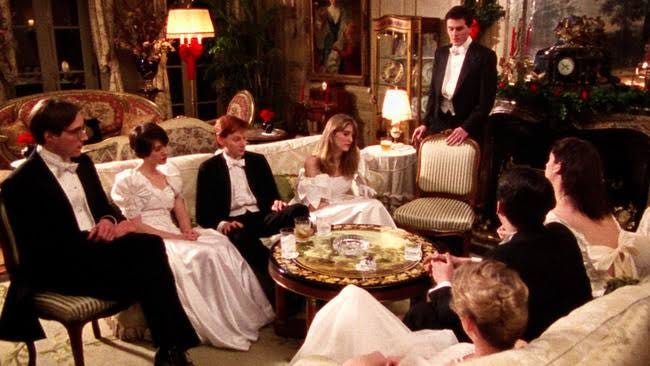
Totally late to the party on this one…sort of. I had seen this film way back in 1999 or perhaps 2000. A fellow film student recommended it, so we watched it on VHS at his apartment - remember VHS. It didn’t make a deep impression on me at the time…I just thought it was okay, but admittedly not my cup of tea. Don’t ask me why, but I randomly thought about the film one evening last month and decided to stream it. Fantastic writing supports a cast of upwardly (or downward?) mobile socialites in New York as they over pontificate on the nuance of social status, self justification, and the ever present anxiety of relational (i.e. romantic) insecurity and tension. I wondered throughout if the casting director deliberately tried to find a lead actress who resembled Molly Ringwald, btw. Overall, this film reads like an extended Seinfeld episode with drier comedy, and wittier banter. Highly recommend…now, I need to watch the remaining two Whit Stillman trilogy installments: Barcelona and Last Days of Disco.
Revenge of the Sith
Don’t ask me why I was thinking about this…but I just noticed something. The end of Revenge of the Sith is a downer in the purest sense: the good guys lose, there’s a funeral, and yet we’re given this sleek, almost seductive image of Darth Vader, Grand Moff Tarkin, and Palpatine overseeing the construction of the Death Star. But what stands out more is the ending’s quiet reversal. After all that scale and machinery, the film closes on something small and fragile: the Skywalker infants being delivered to adoptive families. For the first time, I saw the contrast more clearly—between the Empire’s confidence in strength, power, and force (not the Force), and the fragile hope carried in hidden lives. Not domination, but smallness. Not spectacle, but endurance. Theology of glory versus theology of the cross. Largeness versus humility…
The Big Country
I stumbled across William Wyler’s The Big Country, again. I had seen this in it about a year ago on the weekly PBS Saturday night feature, a steady source of growing my repertoire of old films (my favorite genre). Absolutely love this movie. Captain James McKay portrayed by the venerable Gregory Peck is a hero who persistently refuses to fight, yet ironically overcomes the villains in the end (sorry for the spoiler). His insistence on what Luther called ‘left handed power’ over the ‘right handed’ variety suggests what a Western would look like if Robert Capon sat in the director’s chair. See this film…I won’t say anymore…
Original Gangstas
I remember when this came out, but I never got around to seeing it—and that’s probably a good thing. It brings together OGs from the Blaxploitation era (Pam Grier, Ron O’Neal, Richard Roundtree, Fred Williamson, etc.) and drops them into a 1996 modern setting, but it falls short on a lot of levels. The nostalgia is there, yet weak writing, a thin plot, and uneven acting keep it just shy of cult classic territory. Still, the theme of intergenerational tension is real and unresolved in a lot of communities, at least from my vantage point. What I did find ironic is how the older generation of neighborhood figures—before “gangster” carried its more destructive modern meaning—end up teaming with a pastor and the faith community to fight evil. Imagine that…
Youngblood
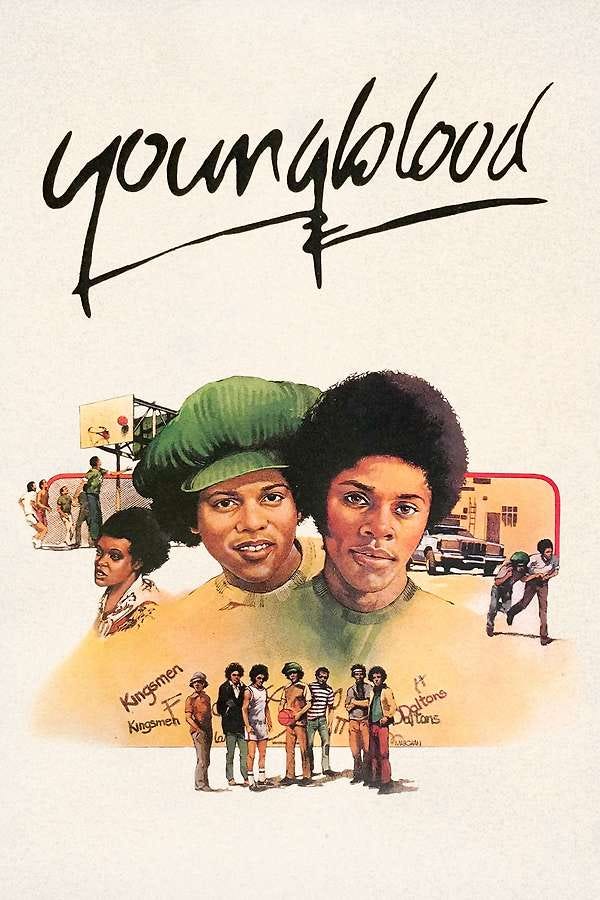
Did not watch this all the way through either, but I may go back to catch up. This 1978 film featuring Lawrence Hilton-Jacobs looks like a mashup between Cooley High and The Warriors. Equal parts campy B movie and social commentary, it portrays life in South Central LA shortly before the era depicted by John Singleton’s Boyz in tha Hood.
Paris, Texas
I didn’t watch this one last month per se, but I have seen it before and highly recommend it. In light of Father’s Day, I thought about the scene below in which Travis (Harry Dean Stanton) poses the fundamental question, What Does a Father Look Like? Btw, I started, but didn’t finish a curated list of recommended Father’s Day Films…maybe look for it next year? In any case, this title will be on the list!
Hood Book: Love & Lust
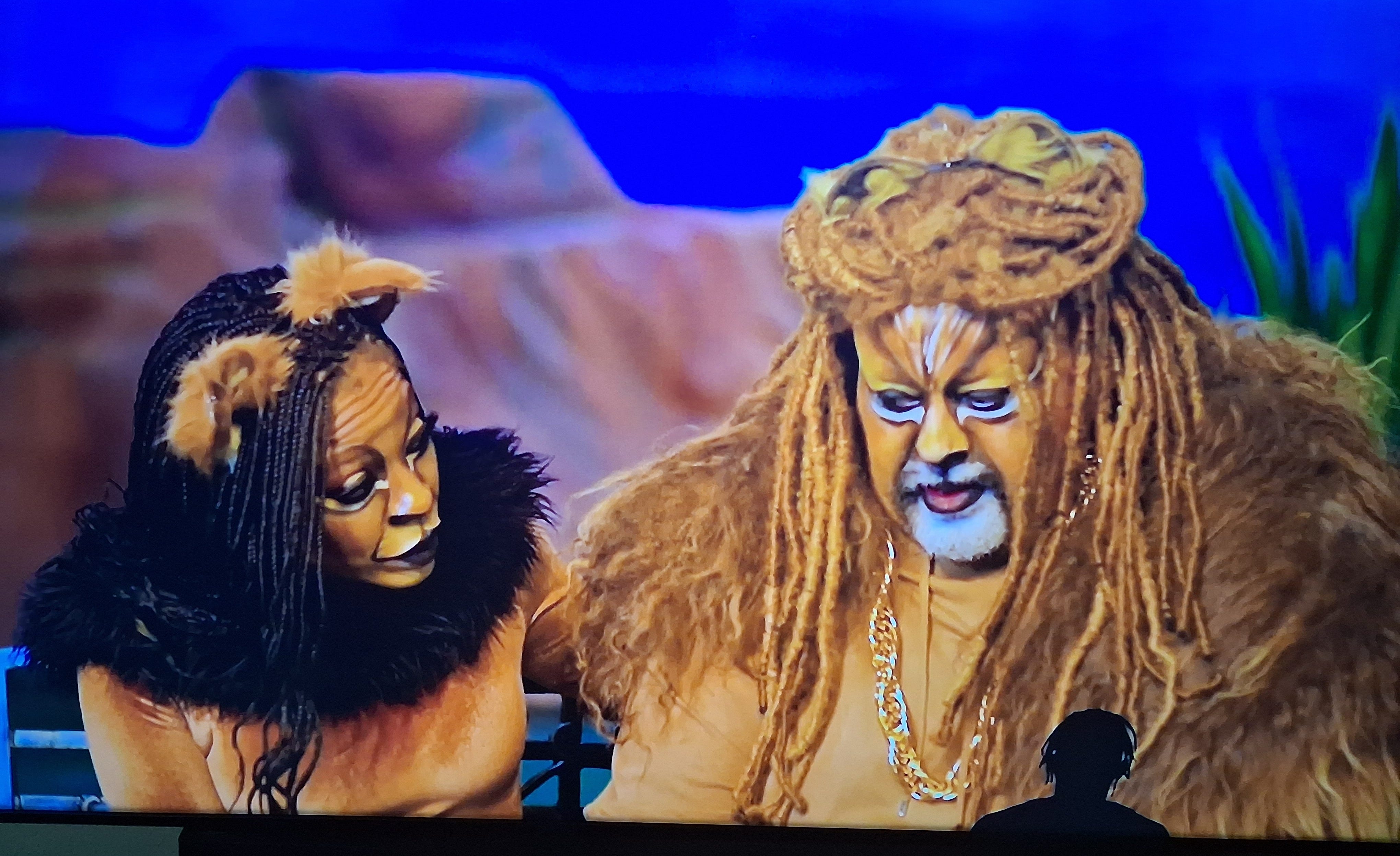
From gospel artist Fred Hammond…yo Fred, what happened, bro? I am forever traumatized by what resembles a fever dream in which The Wiz, Mystery Science Theater 3000, and The Lion King collide in a haze of unintelligible drivel. It's a retelling of the gospel story updated to an "urban" context for the sake of relatability. I appreciate the intent…but some things ought not to be done.
A Word on Juneteenth
Juneteenth Day in Milwaukee bears a unique cultural significance for the Black community. It is one of the rare times we come together to celebrate culture, experience unity, and enjoy what feels like a glorified family reunion. It would be an understatement to say it resembles a microcosmic slice of heaven.
I often wonder how many attendees recognize the historical significance of why we celebrate what we celebrate. Some certainly do, and I’ve had thoughtful conversations with friends who hold differing perspectives on Juneteenth’s meaning. But I also wonder how many people know the difference between what happened in Galveston, Texas, in 1865 and what the Emancipation Proclamation actually declared and accomplished, or which constitutional amendment formally abolished slavery.
After serving as a vendor at the festival, I went home and pulled a few history books off the shelf, thinking the kids might enjoy an impromptu history lesson. They immediately scattered, lol.
My wife and I, however, watched 13th (2016) and had a thoughtful conversation about our nation’s complicated history and how we, as Black Americans, continue to navigate it.
Earlier that day, I had come across a historical marker commemorating the Negro Leagues’ Milwaukee Bears in Rose Park. The plaque tells the story of a long-forgotten team whose record may not have been remarkable, but whose place in Milwaukee’s history certainly is. I couldn’t help wondering how many people walk past that marker every day without ever stopping to read it.
The next afternoon, while taking my son out for another driving lesson (only thirty more behind-the-wheel hours to go!), I made a point of stopping at the park. I had him read the marker aloud, and we talked about what those players endured and what their legacy means for us today.
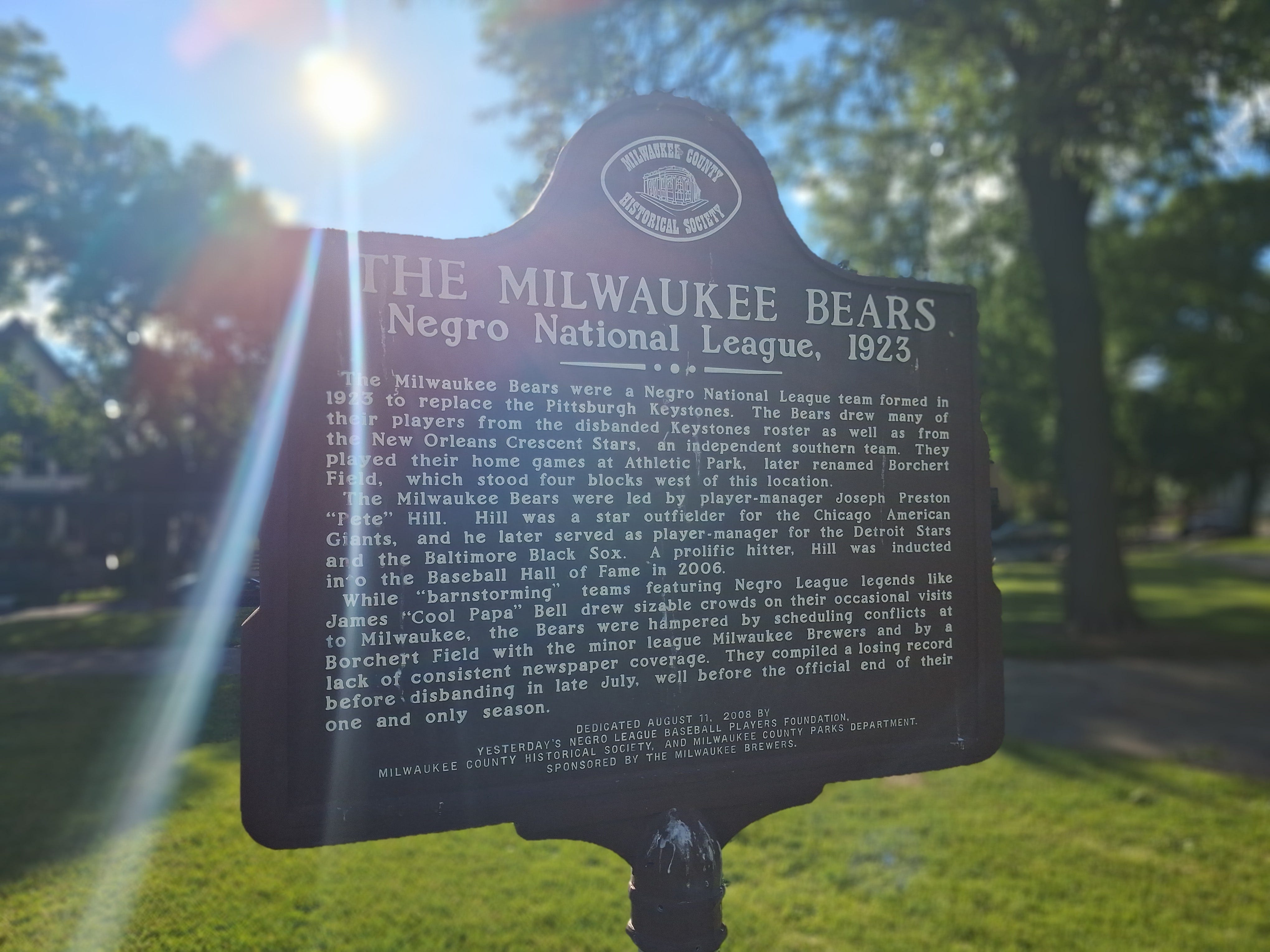
It made me wonder what our communities might look like if we spent more time passing along the stories of those who came before us, whose sacrifices afforded us opportunities they themselves never enjoyed. Of course, I know of an even greater sacrifice that secured something far better than opportunity. Eternal life.
And on that note, my son is already far ahead of where I was at his age. I can’t credit my parenting for that. I can only attribute it to grace, and to the perfect life Jesus lived on our behalf.