
Luke Cage, Luke 2, and Heroes Who Get Us
Reluctant Heroes & the Grace of God

*Editor’s Note: I started writing this about five years ago, hence why some of the references seem dated. This draft is finally seeing the light of day…yay!
A recent conversation with a friend about the 2018 Netflix series Luke Cage prompted me to reconsider the “reluctant hero” trope that runs deep through comics and popular culture. When we first meet Carl Lucas, he is not posturing as a savior or even seeking significance. He is quietly sweeping hair in Pop’s barber shop, hiding in plain sight, concealing an identity forged through suffering. Subjected to prison experiments, he emerges as something like a bulletproof messiah, though one deeply hesitant to accept the role others want to assign him.

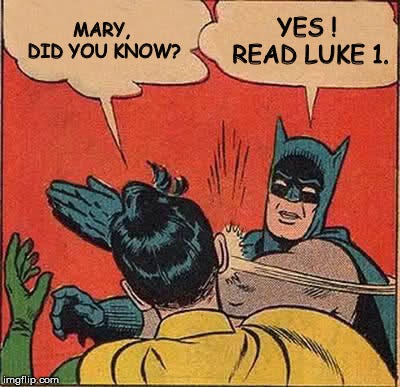
The figure of the reluctant hero remains popular because it taps into a fundamental theological question. A common debate, particularly around Christmas, involves the song “Mary, Did You Know?” and the fashionable tendency to mock the implied ignorance of Jesus’s mother. However, a far more compelling inquiry is the one that touches on the tension between Christ’s divinity and his humanity: Did Jesus know?
This question has been wrestled with for centuries and often takes center stage in pop culture. Martin Scorsese’s The Last Temptation of Christ, often positioned as the theological opposite of Life of Brian’s accidental messiah, presents a Jesus who appears genuinely ambivalent about the Father’s will, unsure of his own identity, and resistant to the calling pressed upon him. Whatever one makes of Scorsese’s choices, the film betrays a profound human desire: to believe in a Savior who truly understands and relates to our human condition.
I remember sitting in a freshman theology class when the question was posed plainly: at what point did Jesus know he was the Son of God? If he was fully human, his knowledge as an infant or child must have been limited (I’ll let the theologians hash this out, btw). The Gospels themselves invite this consideration. Luke 2 suggests that by the age of twelve, Jesus possessed a clear awareness of his unique relationship to the Father, as Mary and Joseph found Him astonishing the temple teachers with his understanding. Yet, this awareness did not short-circuit his humanity. Knowing who he was did not exempt him from growth, temptation, or sorrow.
That tension matters. The enduring popularity of the reluctant hero speaks to a human desire to see power used without the self-serving intent that almost always accompanies it in the hands of mere mortals. We are all conflicted. We know our own proclivities toward corruption when given authority. We struggle with the internal tension between wanting the spotlight and knowing that self-indulgence is ultimately unsatisfying. We are always wrestling between the urge to exalt ourselves and the difficult discipline of humility. We wonder: Do we hide our power (like Luke Cage at first) or unleash it to serve others?
This struggle is as old as the Garden of Eden, where the first people failed not over an explicit moral code, but over an issue of trust and humility versus self-service. We crave a hero who can manage that power, who wrestles with it and eventually chooses the greater good. Even our best cultural heroes—like Iron Man, who begins as a self-centered industrialist but ends in ultimate sacrifice—gain their resonance by passing through this internal conflict. We find them relatable because they struggle like we do.
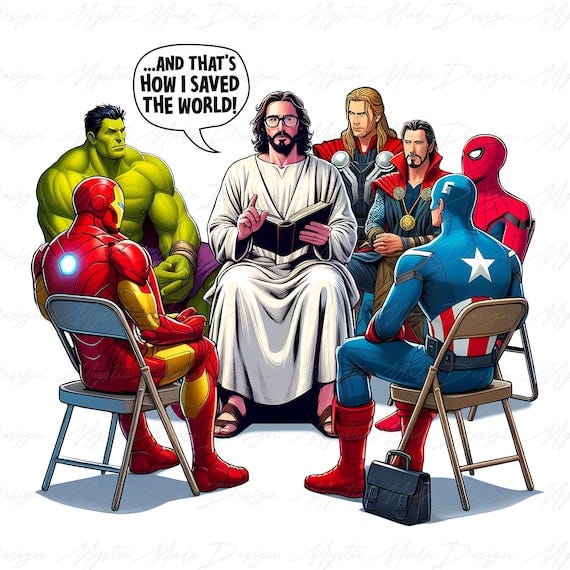
But a hero who merely struggles just like we do offers no salvation. Relatability is comforting, but it is not redemption.
The Gospel offers a resolution to the universal tension of the reluctant hero. We want a Christ who is relatable, not merely impressive. A Savior who suffers with us, not only for us. Scripture affirms this: the writer of Hebrews states that Christ “was tempted in all ways, yet without sin.” He grew weary. He wept. He recoiled from the cup of suffering. His obedience was not mechanical; it was costly.
Jesus is the only human who could be entrusted with all the universe’s power and never use it in any capacity to be self-serving. He was not reluctant to do the Father’s will, but he was utterly unwilling to use his power for his own gain. The writer of Hebrews helps us again, noting, “for the joy that was set before Him, He endured the cross…”
In Christ, we find something Someone better than a superhero who reluctantly saves the day. We find a Savior who willingly identifies himself with our frailty. He is the hero who was vulnerable and helpless, yet obedient to God. This figure provides the external righteousness and redemption that humanity truly needs. Not because he lacks power, but because grace insists on drawing near. The Gospel gives us a hero who struggled for us, suffered like us, and secured salvation in our place. Now, let’s see Marvel top that…
The Pastor in his sermon for Epiphany 1 announced that Joseph and Mary left God in Jerusalem. And of course, that sermon and your article dive into the ongoing exodus that Christ leads us through, as the Word, from our old Adam unto His resurrection, pouring out the new life for those who believe (John 11:25-26).