
Prehistoric Bugs & Apocalyptic Grace
How Fossils and 20th-century cinema helped me navigate a post-apocalyptic world
One of my colleagues recently shared an anecdote about seeing a gigantic bumble bee that caused her to flee despite her best attempts at enjoying an otherwise perfect summer day. Initially, she was going to enjoy the warm weather, but when she saw the enormous insect, it triggered memories of a previous summer in which her apartment had been infested by wasps. I’m not a huge fan of bees myself, so I get it!
Her anecdote prompted me to consider those familiar museum exhibits that display gigantic prehistoric dragonflies and related grotesque animals. Such exhibits reflect our imagined ideas of what the primordial world potentially looked like. Depending on your view, you may imagine the prehistoric realm differently. Even if you believe in the bible, you will have different views on what this era entailed. Some believe in a literal six-day creation with Adam and Eve living six thousand years ago. Others imagine a pre Adamic world, replete with a whole theory about an alleged first earth age, to which we can attribute the origins of fossils, dinosaur bones, petrified mammoths, etc. For such adherents, this is what Peter’s words concerning ‘the world that then existed’ indicate. Still yet, others hold to the gap theory or the ‘day age’ theory, in which one ‘day’ depicted in the six days of creation (Genesis 1) represents one thousand years. While we do not all agree on the details of what exactly constituted the primordial world, it is certain that we are not living in that same realm today.1
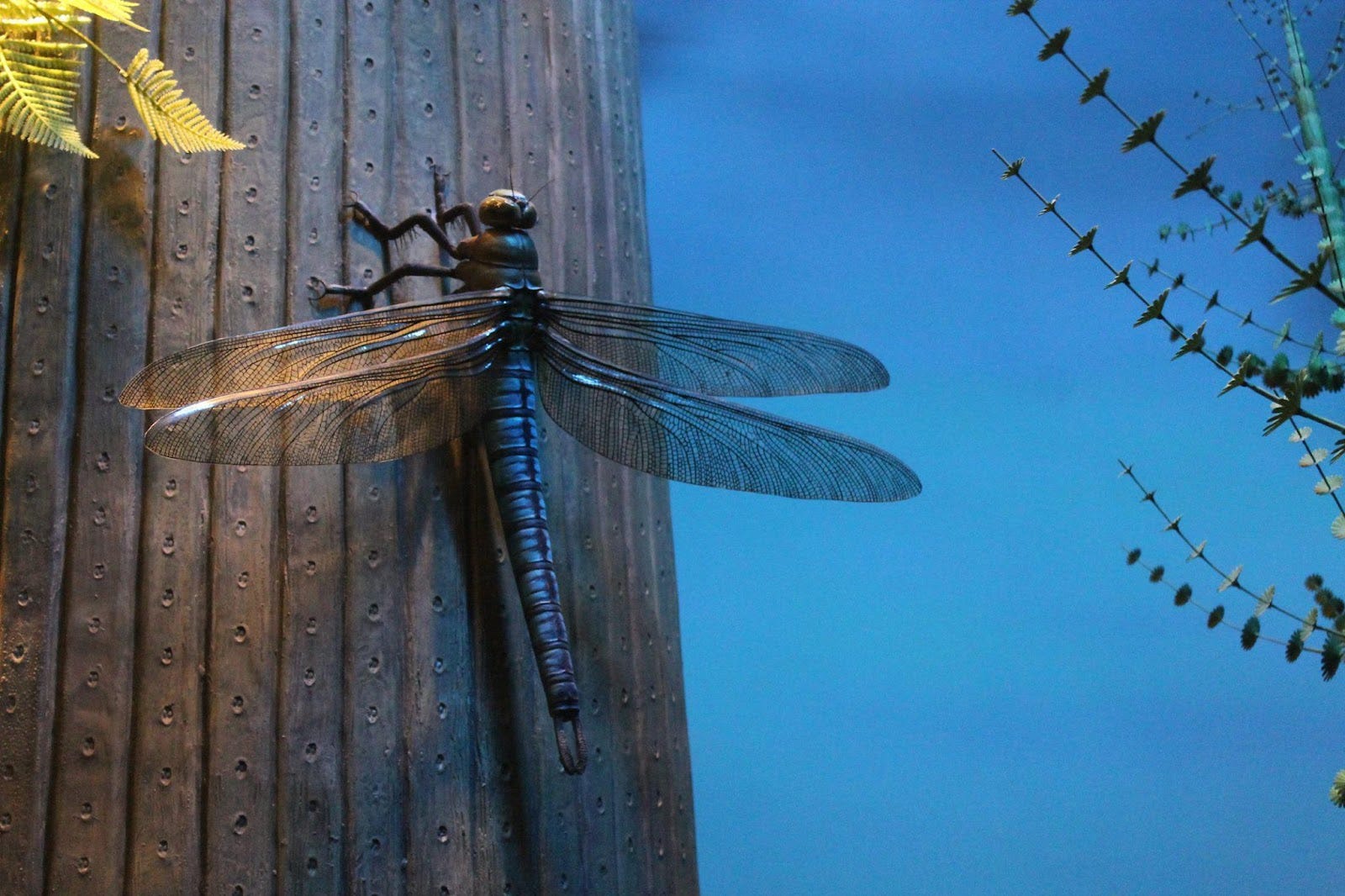
Exaggerated creatures intimate not only a primordial time, but can also insinuate an impending apocalypse. The Bible uses images of animalistic creatures in its depiction of the end of the age. In his vision of the throne room of heaven, the apostle John beholds angelic and humanoid creatures that resemble lions, oxen, and eagles (Revelation 4). The end of days portrayed in the book of Revelation is akin to a King Kong or Godzilla movie in which the presence of an encroaching beast terrifies the world. Observe St. John’s description,
I watched as he opened the sixth seal. There was a great earthquake. The sun turned black like sackcloth made of goat hair, the whole moon turned blood red, and the stars in the sky fell to earth, as figs drop from a fig tree when shaken by a strong wind. The heavens receded like a scroll being rolled up, and every mountain and island was removed from its place.
Then the kings of the earth, the princes, the generals, the rich, the mighty, and everyone else, both slave and free, hid in caves and among the rocks of the mountains. They called to the mountains and the rocks, “Fall on us and hide us from the face of him who sits on the throne and from the wrath of the Lamb! For the great day of their wrath has come, and who can withstand it?”
-Revelation 6:12-17
Revelation continues with depictions of grotesque creatures bearing insectoid parts (Rev 9:7-10) and attacking humanity. Incidentally, I have this memory of sitting in Sunday School class terrified because of the literal interpretations Ms. Yvonne inferred from St. John’s Apocalypse, as she solemnly warned us, “the time to get saved is right now…because after the rapture, there will be terrifying creatures with insect parts walking the earth…” I was young and impressionable, so her warning scared me as much as those cheesy rapture paranoia movies I recall watching in the church basement! Of course, it would be several years before I understood that John was using symbolic imagery…
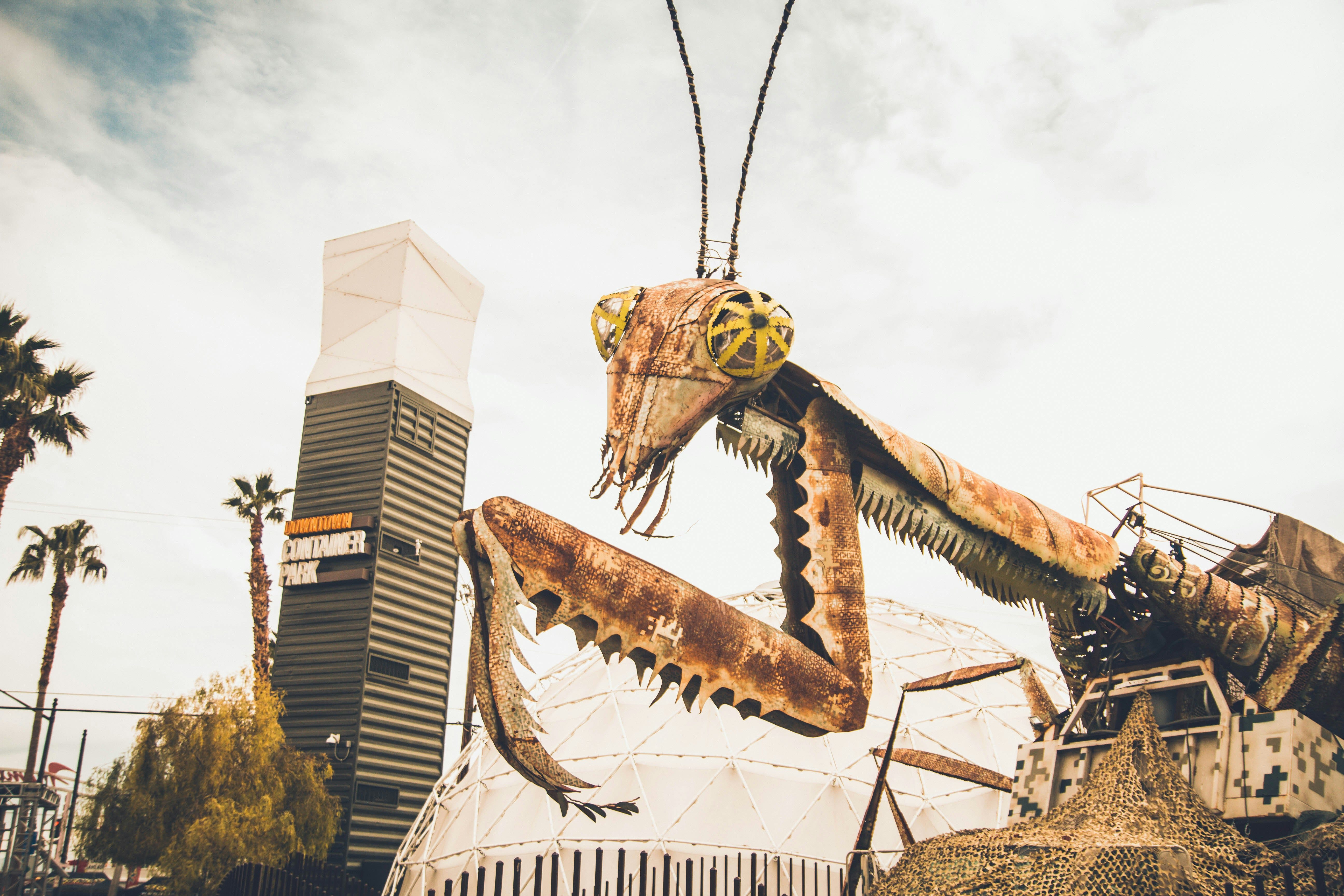
It’s interesting how the imagined realms of the past and the future are often bookended and characterized by monstrous creatures! Whether we are talking biblical implications or such as are conveyed in popular culture, on either side of the temporal continuum, you find that both the ancient past and the future remain shrouded in mystery. Such uncertainty evokes our fear that something is coming to us in a predatory manner.
The 20th Century Sci Fi cinema that shaped me, particularly that of Steven Spielberg, aptly betrays such fears. Consider for example, how the opening of Genesis resembles the eerie premise of Spielberg’s classic, Jaws. The description of the earth being “without form and void and darkness covering the deep” speaks of something foreboding in the water. In other words, some ominous threat ‘out there’ in the sea is going to get us2. Consider also films like Close Encounters of The Third Kind where something ‘out there’ in space is apparently invading us. In E.T., something is actually coming to befriend us, but because we don’t understand it, we fear and try to kill it3.
All of this reveals our fear of the creation subduing us. Which in turn speaks to the conviction in man’s heart that he knows he is a sinner. Sin reverses the creative order God established, in which people were to exercise dominion over everything. Ironically though, as soon as the first people sinned, it is the plants and trees that initially subdue them - as seen when Adam and Eve take refuge among foliage in order to escape judgment for their sin. Genesis records,
And they heard the sound of the Lord God walking in the garden in the cool of the day, and the man and his wife hid themselves from the presence of the Lord God among the trees of the garden…
-Genesis 3:8
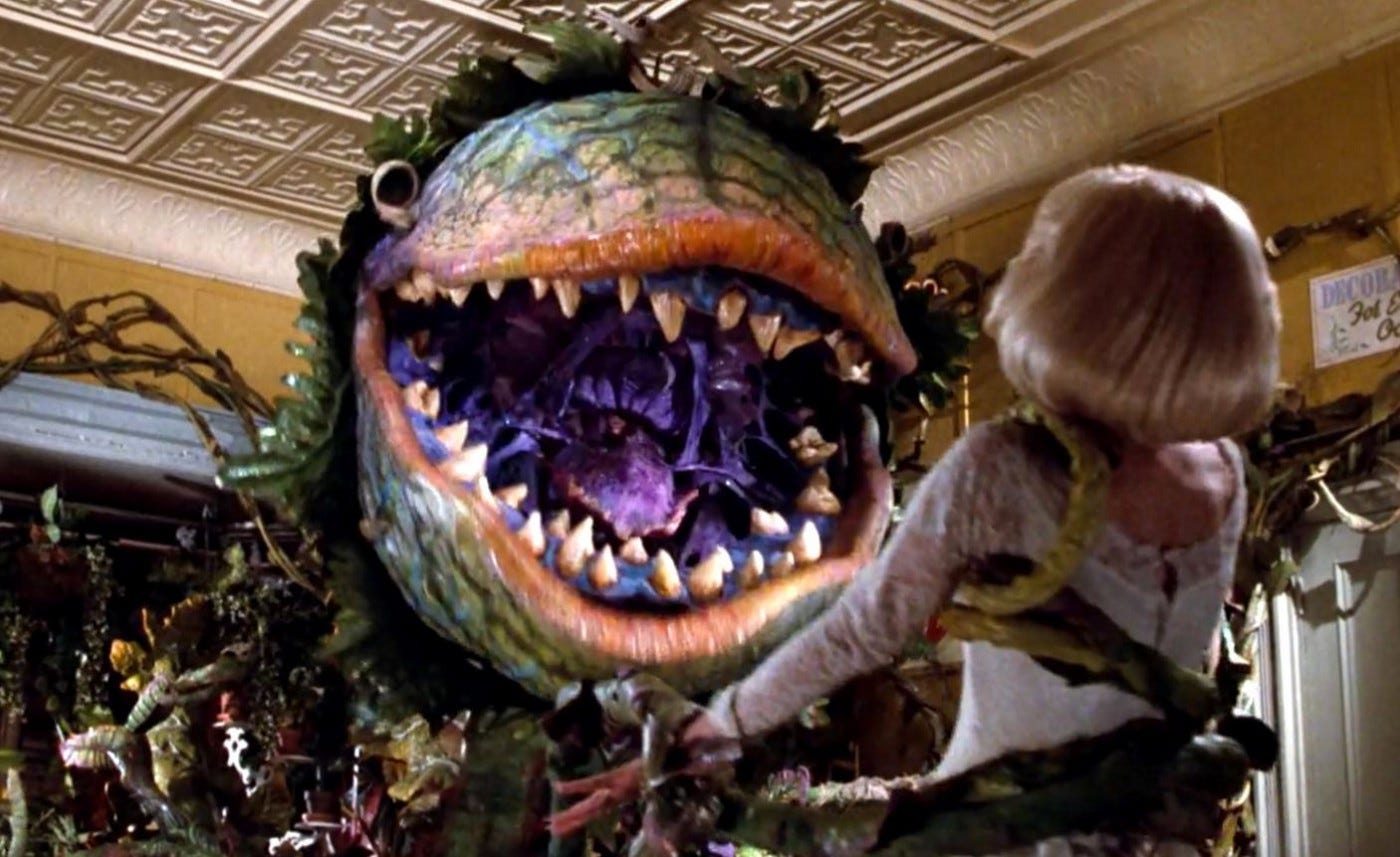
In the account of the flood in Genesis 9, Noah and his family exit the ark and God informs them that, “The fear and dread of you will fall on all the beasts of the earth, and on all the birds in the sky, on every creature that moves along the ground, and on all the fish in the sea…” That being said, there are quite a few creatures that will mess you up if you get too close to them. Furthermore, some people are terrified of spiders (who remembers Arachnophobia?). I myself am terrified of rats, mice, and bats! And I have heard that bison can be somewhat intimidating as well…
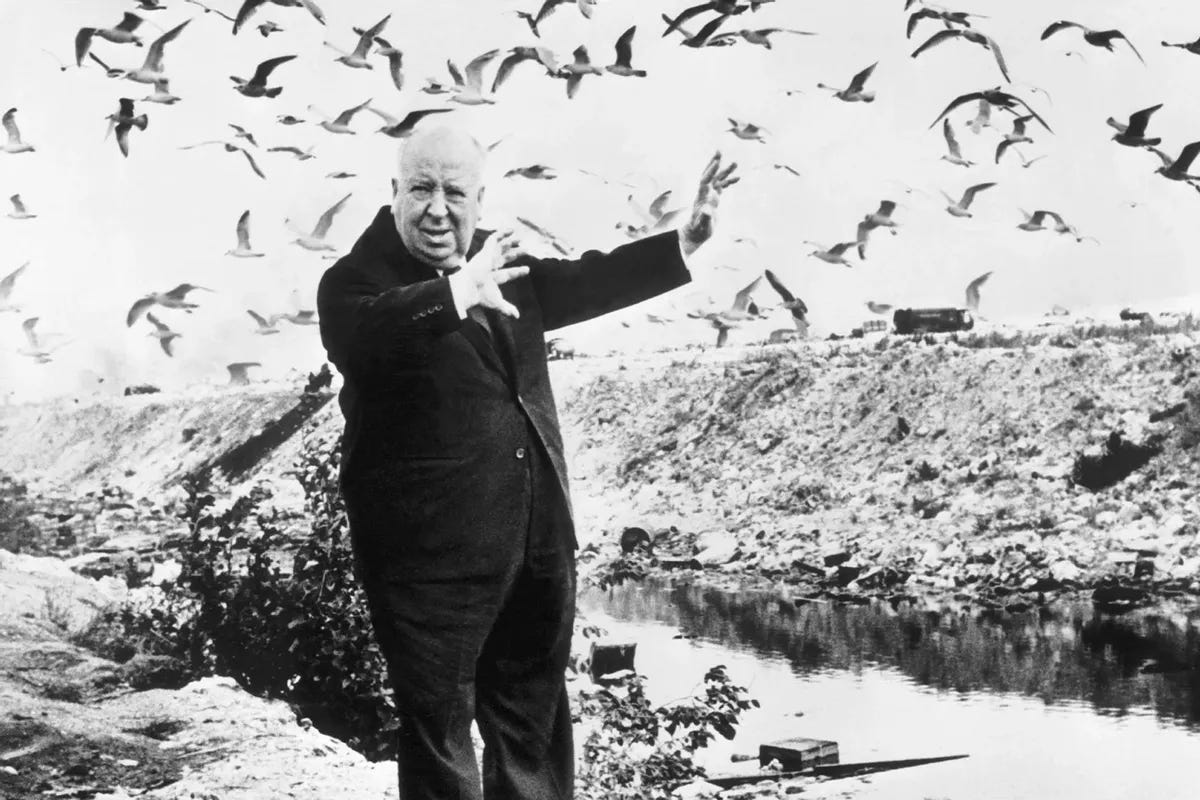
Consider how horror films like Alfred Hitchcock’s The Birds call to mind the Old Testament book of Exodus in which God inflicted plagues on the land of Egypt, in an almost parodic recapitulation of the days of creation. In the New Testament, the apostle Paul describes the unrest of the earth, as the creation groans in birth pangs until the entire cosmos is redeemed (Romans 8). Some cultures even interpret natural disasters as ‘nature’ and/or the gods avenging the earth against our misuse of the environment.
Our fear of being overtaken by our world results from our disconnect from God due to sin. After the Lord confronts Adam for his disobedience in the garden (cf. Genesis 3), the first human responds, “I was afraid because I heard your voice…” Our original sin has in fact ushered in all kinds of fears - both rational and irrational. At least one commentator has even surmised that the Old Testament figure, Job, who was afflicted by satan with numerous calamities, opened the door for such satanic attack through fear, as he notes,
“What I feared has come upon me; what I dreaded has happened to me”
Job 3:25
Though we fear the unknown realm, we yet pursue it. Humans are always in the business of trying to reclaim something that has been lost or trying to recover something from another realm. We see hints of this tendency to climb upward to find transcendence in the 14th chapter of the Gospel of John. Jesus engages in a discourse with His disciples the night before His crucifixion and encourages them not to be troubled by the instability of this present world, but to instead trust in the One who goes to prepare a place for us in the Father’s House. Jesus goes on to say, ‘You know the way to the place where I am going’. Thomas, one of His followers responds, ‘we do not know the way’, as though ‘the way’ is implicitly a moral path to pursue. In our minds, the way has got to be a system or a ladder or a road we travel to get to God. Jesus corrects Thomas’ thinking by informing him, ‘I am the Way…’. Indeed, it’s not so much that there is per se a way to God, but rather, in Christ, we have been given the way from God. The way of law always entails us trying to find something, trying to recover something from ‘out there’, or from ‘back then’. In other words, we are trying find the way…ultimately to salvation. Grace, by contrast is about something Someone coming to us…to save us from ourselves.
When we try to reach or go ‘out there’ into the mysterious things and force them into our present context, it is always disastrous. We see this in cinema for example, when characters attempt to go into the future to see what we can find, as in the original Planet of the Apes movie. Yet, the time traveling astronauts arrive in a futuristic earth in which primates have evolved far beyond humans and made them their slaves. The Marvel film, Black Panther poses the question of whether an obscure, unassuming African civilization could take futuristic weaponry and free the entire world from oppression, and yet the movie strongly condemns such an attempt as being counterproductive to social progress. Even the Back to the Future trilogy concludes with Doc Brown asserting that ‘the future hasn’t been written yet’ - this after several failed endeavors to approach time as an entity to control. Perhaps, we are going to go ‘out there’ into space for exploration, and we are nearly wiped out by hostile extra terrestrials as in the 1979 film, Alien. Or, we may seek to advance technology, but The Machines (and Skynet) end up taking over.
The fear of technology dominating us, however is just one symptom of our fear of being subjugated by our world. We also fear certain people groups taking our country from us; we fear economic collapse if we should default on our loans and foreign nations should overtake us; we fear people crossing our borders and entering our country ‘the wrong way’. Such fears inform the mindset that assumes that we just need to bring back the right era of American exceptionalism, in order to finally have the kind of society that we want. And yet, in recent years, we have seen this play out disastrously in its net effect.
Even in the early 90’s, Black Americans were invoking the sensibilities of Marcus Garvey as we talked about going Back to Africa, while we rocked the African medallions (yes, I had one too!), and as we celebrated the short lived prominence of Afrocentric music like X Clan, Public Enemy, Boogie Down Productions, and similar rappers. The idea was that If we could reclaim our African roots, we could solve all our societal problems and find ultimate healing as a culture and a community. It’s fascinating to parallel the stereotypical evangelical equivocation of Trump with Jesus with the cliche of older Black folk who would literally place JFK, Martin Luther King, and Jesus on the same picture frame pedestal. No matter who we are, what our politics are, we all feel as though, we want to get back to the ideal societal and communal place in which we feel everything was perfect…or at bore some semblance of normality and domestic tranquility.4
Spielberg’s 1993 film, Jurassic Park challenges us to consider what it would be like to get back to the Jurassic age. Such an impulse betrays a desire to get back to the garden of Eden where we once walked with God ‘in the cool of the day’. Yet, bringing back the prehistoric creatures always brings about an apocalyptic scenario in these storylines. As Romans 7:10 notes, ‘the law which I thought would bring life, ended up bringing death’. In other words, The dinosaur park which I thought would bring about paradise on earth, brought about the apocalypse!
The film’s plot is familiar to most of us: Venture capitalist, John Hammond seeks funding and validation from the scientific community for an island in which the age of the dinosaurs can come to life in the 20th Century. To this end, he extracts dinosaur DNA from a mosquito encased in amber to revive the prehistoric creatures. Things of course go awry and the dinosaurs wreak havoc on the glorified theme park, placing everyone in danger. In response, Hammond immediately attempts to regain control over the technological systems that govern the park. Meanwhile, Dr. Alan Grant and Hammond’s grandchildren, the park’s target audience, find themselves helpless, vulnerable, wounded, and weak in a wilderness filled with trees, and ‘singing dinosaurs’. This is incidentally, the only moment in the film where the intended vision of Jurassic Park becomes a reality. In other words, it is not through control or law that we enjoy the divine gifts, but rather through weakness, childlike wonder, brokenness, and humility.
In the final act, the characters return to the lobby in which we see dinosaur skeletons suspended from the ceiling in a museum-like quality. Earlier in the film, Hammond had informed everyone as he climbed the staircase, that this is more than a museum, this is more of a living museum. In this scene, we see the human attempt to ascend and transcend beyond just observing artifacts and appreciating them in their proper mysterious place, which is in a time lost...we seek to redeem ourselves and the creation by acquiring that lost world and figuring out all its secrets.
At this point in the film, the lobby of Jurassic Park has become a sanctuary for the failed humans who have taken hold of more than they can handle. Spielberg communicates to us in a similar manner as he does in Indiana Jones and the Last Crusade, that the sacred things belong untouched by human hands - i.e. the holy grail is best left within the bounds of the seal, the fruit of the tree of knowledge is best left not eaten, dinosaurs and the mysteriously lost world whence they came is best left unknown, untouched, and yet admired and beheld with awe and interest. Furthermore, God is best known and enjoyed in mystery and awe - apart from our arrogant attempts to "be wise" and gain the knowledge of good and evil. After all, Deuteronomy reminds us, ‘the secret things belong to God’.
Learning to release the sacred things is the true way of life. Such a gesture of relinquishing control reminds us of Jesus, who is our life - the One who released Himself to God when He expired on the Cross. The giving up of His breath signified a reversal of what took place in the creative order when God gave breath to the first Adam in Genesis. The passivity of Christ's death broke the curse of Adam and secured for us a redeemed creation that far exceeds the paradise that was lost when our ancestors rebelled against the Creator.
In Psalm 22, the psalmist depicts Jesus as a strange creature: a mere worm surrounded by vicious beasts during His crucifixion…yet, in John’s depiction of His return, He appears as a triumphant lamb with seven eyes, to Whom all creation submits in worship. In His imminent revelation, Christ fulfills the mystery of ‘the beginning’ and ‘the end’ of time, as He remains both the Alpha and the Omega of the prophetic Word. While I cannot definitively say what the primordial world looked like, I confidently await the redemption of the universe in the age to come. Jurassic Park and grotesque creatures are the stuff of good fiction and speculation, but The Word who took on flesh is the essence of good news. The former entertains the imagination and makes us wonder…the latter saves the soul and leaves us in awe.
Some have attempted a Biblical explanation for mysterious natural phenomena by inferring interpretations from the book of Job for example in which, the ancient Scripture alludes to creatures that resemble our notions of the Brontosaurus or of mythical creatures like dragons (Leviathan). To my knowledge though, no unified consensus among commentators exists that would definitively identify the creatures mentioned in the alluded to passage.
Other late 20th Century films that maintain this implication include Leviathan and The Abyss.
Consider this excerpt from a Mockingbird post by Ethan Richardson, (Ethan Richardson on E.T. (Mockingbird).
When I imagine love in creature form, I actually picture it being more like E.T. the extra-terrestrial, Steven Spielberg’s adorable space alien from thirty years ago who healed bleeding wounds with his glowing finger and exhorted his youthful guardians to “be good.” After all, isn’t that what love, at its best is about—healing wounds and being good? In the movie, however, E.T. is pursued so relentlessly by the scientists and government agents charged with figuring out what the hell this magical creature is, how he works, and where he comes from, that by the end E.T. winds up near death on a makeshift operating table, his red life-light dimming, electrodes taped all over his dehydrated body.
When I consider our increasingly aggressive and well-funded efforts to “decode” and demystify love—and where such efforts might ultimately lead—I can already imagine the scene: those same scientists in their goggles and jumpsuits looking grimly down upon love’s cold carcass and muttering, “Well, not much we can do at this point. Too bad we had to kill love to understand it. That’s the last thing anyone wanted. But at least now we can perform an autopsy and discover what makes this sucker tick.”
Adam Morton from Mockingbird Ministry has a fascinating talk worth a listen about the contrast between the 1619 Project and the 1776 Movement. In his talk, Morton considers both as an attempt to implement the ‘right law’ on earth in order to perpetuate the reign of the law, even in the age to come. To listen to the talk, you can visit this link!
Brilliant read. The connection between Jurassic Park and the futility of law really hits hard, Hammond trying to contrl everything while Grant just sits in wonder with the kids. Watched that movie probably 20 times but never caught that grace angle til now.